FPC & FFC Connectors: Guides, Comparisons & Selection Tools
Everything on FPC and FFC connectors in one place — ZIF vs LIF actuators, pitch comparisons, failure modes, and how to choose the right connector for your flex circuit.
Articles
16 entries
ZIF vs. LIF vs. Non-ZIF FPC Connectors Explained
Choosing between ZIF, LIF, and non-ZIF FPC connectors affects cost and durability. Learn how they differ, how actuators work, and where each design fails.

Non-ZIF FPC Connectors Explained: Retention Without a Latch Mechanism
Non-ZIF FPC connectors eliminate mechanical flip-locks to lower costs and simplify assembly. Learn how contact friction works and how to mitigate contact wear.

FFC vs FPC cables: Key differences, costs, and selection guide
Compare Flexible Flat Cables (FFC) and Flexible Printed Circuits (FPC). Evaluate manufacturing processes, routing capabilities, cost structures, and hardware applications.

FPC Connector Pitch: 0.3mm vs 0.4mm vs 0.5mm Compared
Compare 0.3mm, 0.4mm, and 0.5mm FPC connector pitches for hardware design. Evaluate PCB assembly yields, current capacity, trace breakout rules, and mechanical durability.
How to design reliable FPC cable connections
Master robust FPC cable layout and mechanical design rules. Learn bend radius calculations, coverlay window design, stiffener selection, and strain relief techniques.

FPC connector selection guide for engineers
Master the engineering decision framework for selecting FPC connectors. Evaluate actuator styles, contact positions, stiffener thicknesses, and high-frequency capabilities.

Strain Relief, Stiffeners, and Mechanical Anchor Points in Flex Layouts
Flex circuits are vulnerable to tear damage and pad lifting under mechanical tension. Discover proven stiffener, strain relief, and anchor design rules.
Managing Dynamic Bending Fatigue and Minimum Bend Radius in Flex Circuits
Dynamic flex applications risk copper work-hardening and trace cracking over time. Learn how to calculate minimum bend radius and position traces on the neutral axis.
Precision Fine-Pitch SMT Soldering and Rework for 0.3mm to 0.5mm FPC Connectors
Soldering 0.3mm to 0.5mm pitch FPC connectors requires precise thermal management to prevent housing melt and solder bridges. Discover professional SMT rework techniques.
High-Speed Signal Integrity over FFC and FPC Cables
Routing multi-gigabit protocols over FFC and FPC cables presents severe signal integrity challenges. Learn how shielding, dielectric control, and impedance matching prevent attenuation and crosstalk.
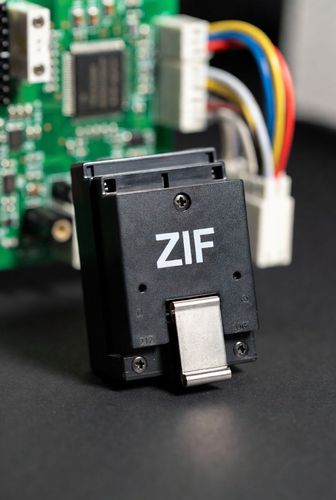
Overcoming ZIF and Non-ZIF Connector Latch Failures in High-Density FPC Designs
Fragile flip-lock and slide-actuator latches on micro FPC connectors frequently break during prototyping and assembly. Learn how to optimize retention force and design for mechanical durability.
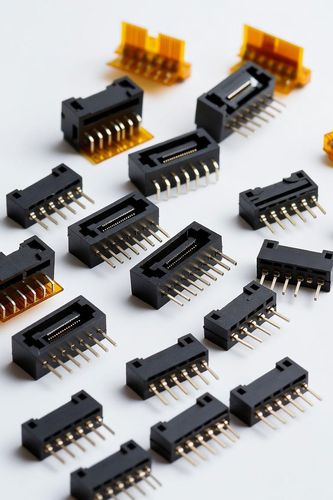
Selecting High-Speed 0.3mm–0.5mm Pitch FPC Connectors for 5Gbps+ Video and Data
4K/120Hz and 8K/60Hz video streams have made FPC connectors a genuine RF design problem, not just a mechanical one. Here's how impedance, shielding, and pinout choices determine whether a 0.5mm pitch connector survives 5Gbps or becomes a source of link failures.

Micro-Pitch Integration: FPC/FFC Connector Applications in Laptops, Displays, and Cameras
An engineering review of micro-pitch FPC connectors deployed in high-density consumer electronics, detailing EMI suppression, thermal endurance, and vibration mitigation.
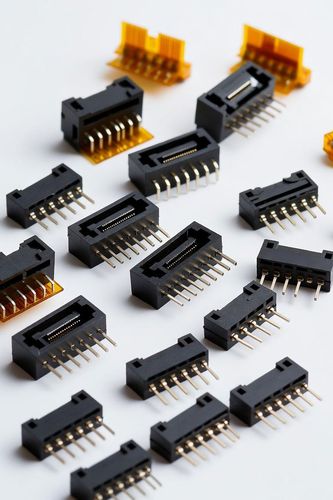
Spatial Orientation: Engineering Top, Bottom, and Dual-Contact FPC/FFC Interfaces
A study on terminal layout orientation in flexible circuit connectors, evaluating trace alignment, signal routing paths, and the advantages of dual-contact geometries.
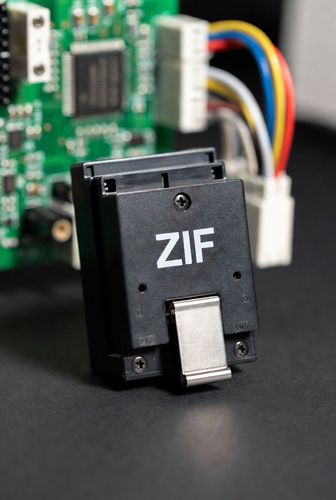
Zero Insertion Force Mechanics: Comparing ZIF and Non-ZIF FPC/FFC Interfaces
A comparative analysis of physical insertion force, contact wipe, abrasion wear, and long-term mating cycle reliability in high-density flexible circuit connectors.
Actuator Dynamics: Mechanical Reliability of Flip-Lock and Slider-Lock ZIF Connectors
A technical exploration of ZIF connector locking systems, comparing rotational flip-lock levers with linear slider-lock bars for retention force and assembly efficiency.