Board-To-Board
Explore board-to-board (BTB) connectors used to connect printed circuit boards in compact, high-performance electronic systems. Learn about connector types, stacking heights, pitches, signal integrity, power delivery, and design considerations for applications
Articles
11 entries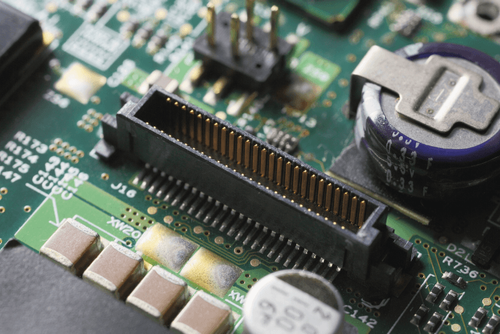
Self-Securing Board-to-Board Connectors: How Auto-Latching Mechanisms Work
Explore the mechanical design of auto-latching board-to-board connectors. Learn how spring tabs and snap fits replace clips while managing fatigue and thermal creep.
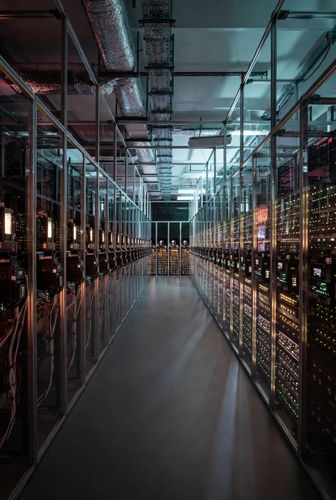
Micro-Pitch Board-to-Board Connectors: Design Constraints Below 0.4mm
Designing below 0.4mm pitch introduces tight manufacturing tolerances and crosstalk challenges. Learn how to optimize micro-pitch interconnects for dense layouts.

What is a wire-to-wire connector? Design considerations explained
Master the design rules for wire-to-wire (W2W) interconnect systems. Explore environmental sealing, keying options, strain relief backshells, and harness modularity for robust equipment design.

What is a wire-to-board connector? Applications and selection guide
Discover how wire-to-board (W2B) connectors interface discrete wiring with PCBs. Learn about pin selection, retention locking mechanisms, crimp terminal dynamics, and board footprint design.

What is a board-to-board connector? Complete guide for engineers
Learn how board-to-board (B2B) connectors function in modern PCB architectures. Explore spatial orientation, pitch constraints, stack height calculations, and board-level design considerations.
Board-to-Board Mezzanine vs. Cable-to-Board Interconnects: Architectural Trade-Offs in Hardware Design
Choosing between mezzanine board-to-board connectors and cable-to-board assemblies impacts stack height, thermal dissipation, and signal paths. Here is a practical engineering guide.
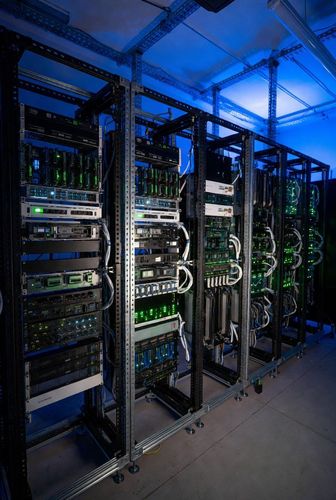
Floating and Self-Aligning Board-to-Board Connectors for High-Density Systems
Mating multiple parallel or perpendicular PCBs can induce solder joint strain due to tolerance stack-up. Learn how floating Board-to-Board connectors absorb mechanical misalignment.
Backlock vs. Autolock: Choosing the Right FFC/FPC Retention Mechanism for Harsh Environments
Friction-fit alone isn't enough once a flexible circuit is mounted on a robotic arm or an outdoor base station. Backlock and Autolock connectors solve cable retention with two genuinely different mechanical approaches.
High-Speed Board-to-Board Connectors: Interface Design Guide
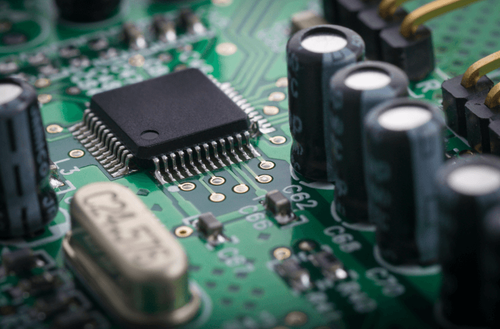
A high-speed board-to-board connector is a fundamentally different class of hardware than a standard low-frequency part — every element of its physical architecture is precision-modeled as a continuous transmission line.
Blind-Mate Backplane Connectors: Guide Pins, Floating Housings, and Insertion Force Management
A technician sliding a 40-pound blade into a rack slot can't see the connector at the moment it matters most. Blind-mate backplane connectors solve this with guide pins, floating housings, and carefully managed insertion force.

Mastering High-Speed Board-to-Board Connector Selection
From mezzanine layouts to orthogonal stacking, picking the right board-to-board connector ensures structural integrity and flawless signal delivery.