Supply Chain & Sourcing
Practical guidance on connector obsolescence, second-sourcing, and supply chain risk — reading EOL notices, qualifying alternate suppliers, and designing for resilience before a shortage hits.
Articles
7 entries
Verifying True Intermateability: What "Pin-Compatible" Doesn't Actually Prove
Two connectors sharing pitch and pin count isn't the same as being truly intermateable — the mechanical and electrical checks a second-sourced or cross-referenced connector still needs before it's qualified.

TPA, Contact Retention Force, and Vibration Resistance: What "Equivalent" Doesn't Guarantee in Automotive Connectors
A pin-compatible automotive connector alternate can still fail in the field if its terminal position assurance, retention force, or vibration performance doesn't match — what USCAR-2 and LV214 actually test, and why it matters for second-sourcing.

Signal Integrity Risk in Second-Sourced High-Speed Connectors: Pin-Compatible Isn't Impedance-Matched
A mechanically interchangeable high-speed connector alternate can still introduce impedance discontinuities or added crosstalk that a pin-count comparison will never catch — what to actually verify before qualifying a high-speed second source.

Building a BOM Risk Register: Scoring Single-Source Connector Risk
A practical framework for scoring which connectors on your BOM are single-source risks — before an EOL notice forces the decision.

How to Read a Connector End-of-Life (EOL) Notice or PCN
What a PCN or EOL notice actually contains, the dates that matter most, and a first-week checklist for responding before your Last Time Buy date passes.
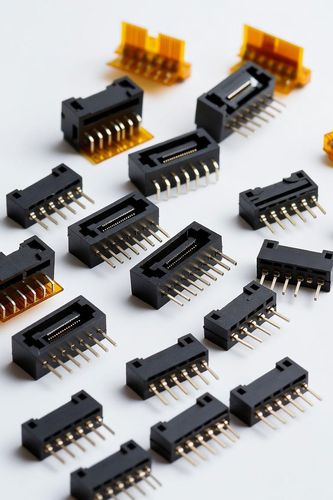
Supply Chain Sourcing and Second-Sourcing Strategies for Connectors
Single-source proprietary connectors create severe supply chain risks. Learn how to design cross-compatible footprints and source drop-in connector alternatives.
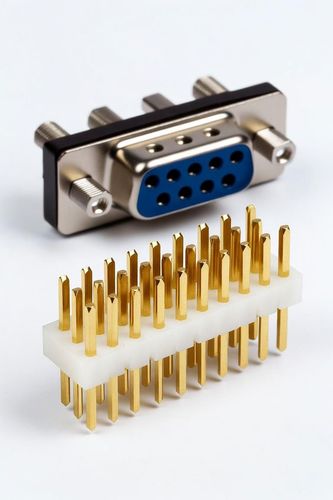
Reverse Engineering and Sourcing Obsolete or Proprietary Connectors
Sourcing legacy or proprietary connectors requires systematic parametric identification. Discover how to measure pitch, contact geometry, and find cross-compatible alternatives.