Automotive Connectors
Explore automotive connectors used to deliver power, signal, and sensor data across vehicle electrical systems in demanding thermal, vibration, and reliability environments. Learn about sealing and waterproofing, vibration and fretting resistance, high-current
Articles
16 entriesBattery Cell Interconnect Systems: CCS, Busbars and FPC Explained
A cell interconnect system joins battery cells and carries sensing signals to the BMS. Compare CCS, busbars and FPC, and see how cell format changes the design.

Camera SerDes Overview: Automotive GMSL and FPD-Link
Automotive ADAS cameras rely on SerDes to stream high-resolution video over long single-pair cables. Learn how GMSL and FPD-Link work and which connectors carry them.

HVIL Connector Design: High-Voltage Interlock Loop for EV Battery Disconnects
HVIL is a fundamental safety mechanism in electric vehicles. Explore the mechanical contact sequencing, circuit mechanics, and failure modes of HVIL disconnects.

LiDAR, Radar & FAKRA Sensor Connectors: IP Rating and Signal Integrity Requirements for ADAS
Exterior ADAS sensors demand distinct connector specifications compared to cabin electronics. Discover the key trade-offs between IP69K sealing, vibration damping, and RF integrity.

High-voltage EV connectors explained
Master high-voltage EV connector design. Explore 400V/800V power delivery, 360-degree EMI shielding, CPA/HVIL safety loops, and high-current terminal geometries.

Connector requirements for electric vehicles (EVs)
Examine the specialized engineering requirements for EV interconnects. Learn high-voltage safety (HVIL), IP6K9K sealing, thermal management, and creepage/clearance rules.

Automotive camera connectors: SerDes and high-speed interfaces
Explore automotive camera SerDes architectures. Learn GMSL, FPD-Link, and MIPI A-PHY protocol integration, Power over Coax (PoC) design, and coax vs STP selection.

Automotive Ethernet connectors explained
Discover how Automotive Ethernet connectors enable high-speed zonal vehicle architectures. Learn OPEN Alliance standards, UTP/STP cable interfaces, and physical layer design rules.

Mini-FAKRA vs FAKRA: What's the difference?
Compare standard FAKRA and Mini-FAKRA (HFM) RF connectors. Evaluate footprint miniaturization, bandwidth expansion up to 20 GHz, multi-port modules, and high-speed ADAS design rules.

Automotive connector standards: A beginner's guide
Learn the foundational standards governing automotive connectors. Explore USCAR-2, ISO 20653 IP ratings, SAE J2030, and OEM validation specs like GMW3191.

Battery connector systems for electric vehicles
Discover battery interconnect systems in electric vehicles. Learn Cell Connection Systems (CCS), flex-circuit BMS monitoring, high-current busbars, and Manual Service Disconnects.
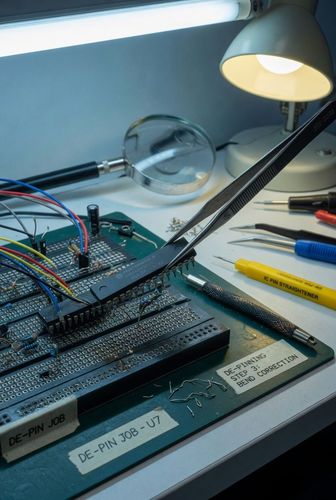
Single Pair Ethernet (SPE) and Automotive Ethernet Connectivity Standards
Single Pair Ethernet transmits full-duplex gigabit data over a single twisted pair. Explore how SPE reduces wiring weight and simplifies zonal hardware layouts.

Next-Generation Automotive ADAS Connectors: Architectural Transition to Mini-FAKRA and High-Speed Ethernet
Modern ADAS architectures require gigabit data speeds. Discover how Mini-FAKRA and Automotive Ethernet solve weight, space, and EMC constraints in vehicle design.

Environmental Sealing and IP Ratings for External ADAS Sensors
External ADAS sensors must withstand high-pressure washdowns, thermal shock, and salt spray. Learn how dual-O-ring seals and potting protect sensor interfaces.
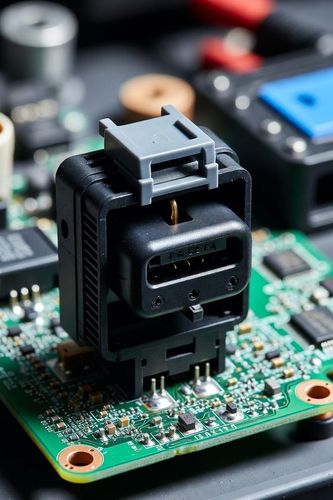
Next-Generation Telematics: Scaling Bandwidth Density with Mini-FAKRA Interconnect Systems
A technical exploration of Mini-FAKRA (HFM) connector networks, analyzing space-saving topologies, multi-port packaging, and 20 GHz data scaling for autonomous platforms.
Automotive Telematics Infrastructure: Engineering Standards for FAKRA RF Interconnect Matrices
A deep technical look at FAKRA connector architecture, evaluating color-coded mechanical keying, automotive environmental compliance, and sub-system vibration isolation.