The Challenge of EOL and Proprietary Hardware Interconnects
Hardware maintenance engineers, system integrators, and electronics repair technicians frequently encounter unidentified or discontinued connectors. Whether refurbishing legacy industrial machinery, servicing automotive electronics, or redesigning mature hardware products, finding exact connector replacements can be difficult when component documentation is missing or original manufacturers issue End-of-Life (EOL) notices.
Proprietary connector designs further complicate sourcing. OEMs often customize existing connector families by modifying keying slots, changing plastic housing colors, or using non-standard pin pitch increments to lock customers into proprietary supply chains. Successfully identifying or cross-referencing these components requires a structured parametric process.
Step-by-Step Parametric Identification Workflow
When faced with an unknown or obsolete connector, technicians and engineers should execute a systematic identification routine:
- Measure Contact Pitch Accurately: Pin pitch—the center-to-center distance between adjacent contact pins—is the primary defining metric. Using digital calipers or an optical comparator, measure across multiple pins (e.g., from pin 1 to pin 10) and divide by the number of intervals to eliminate measurement error. Common metric pitches include 0.5 mm, 0.8 mm, 1.0 mm, 1.25 mm, 1.5 mm, 2.0 mm, and 2.54 mm.
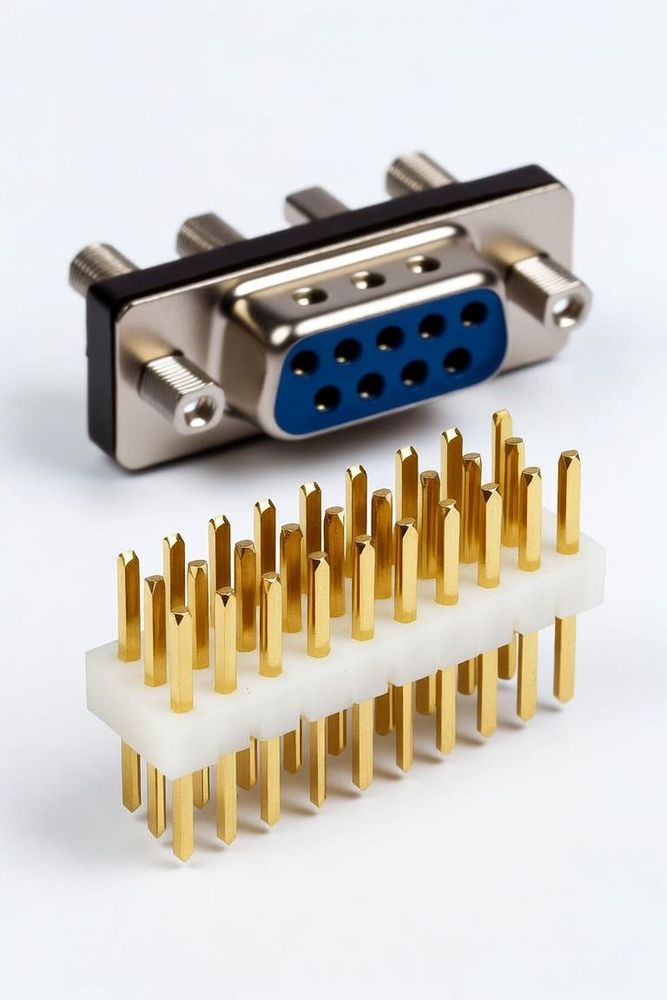
- Identify Contact Geometry and Termination: Examine contact pin structure. Are they square pins, round pins, flat blade contacts, or spring beams? Note the termination method: surface-mount (SMT), through-hole (TTH), insulation displacement (IDC), or crimp tail.
- Evaluate Keying, Latching, and Retention Features: Document the outer housing mechanics. Note the location of polarization slots, alignment ribs, side latches, friction locks, or secondary locking tabs (TPA). These features narrow down the specific product family among major manufacturers.
Utilizing Parametric Databases and 3D Modeling Tools
Once physical parameters are established, query parametric search tools on major component distributor databases or specialized connector identification portals. Input pin pitch, contact count, row arrangement (single, dual, or multi-row), and mounting style to filter down candidate parts.
When an exact manufacturer match is obsolete, download 3D STEP models of candidate cross-reference parts. Overlay the 3D model onto the original PCB layout CAD file or 3D scan to verify pin alignment, PCB footprint compatibility, and mechanical housing clearances before ordering samples.
Strategies for Mitigating Obsolete Supply Chains
When exact form-fit-function replacements are unavailable, engineering teams can apply alternative mitigation strategies:
- Intermateable Second-Sourcing: Search for second-source manufacturers (such as Taiwan or China-based interconnect specialists) that produce direct drop-in equivalents designed to intermate with original series footprints.
- Custom FPC Adapter Boards: Design a small, low-cost adapter PCB that bridges the legacy PCB pad layout to a modern, readily available off-the-shelf connector.
- 3D-Printed Replacement Housings: For low-volume repairs, reuse the original metal contact pins by carefully extracting them from damaged plastic housings and inserting them into custom 3D-printed SLA/SLS replacement shells.
By mastering parametric measurement techniques and utilizing 3D CAD modeling workflows, hardware teams can source hard-to-find interconnects and resolve supply chain bottlenecks.