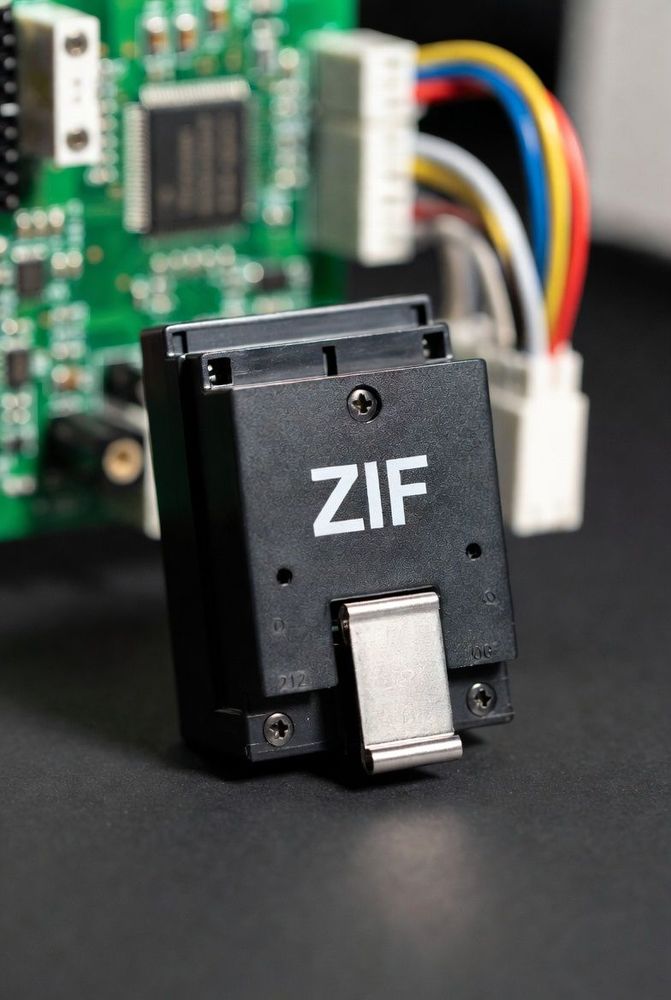
The Mechanical Fragility of Micro-Pitch Actuators
As consumer devices, medical wearables, and compact industrial sensors push toward smaller form factors, Zero Insertion Force (ZIF) and Non-ZIF Flexible Printed Circuit (FPC) connectors have scaled down dramatically. Modern fine-pitch connectors feature pin spacings as small as 0.3 mm or 0.25 mm. While these micro-interconnects allow dozens of signals to pass through tiny board areas, their physical miniaturization comes at a heavy cost: extreme mechanical fragility.
During prototype assembly, field servicing, or automated board testing, the hinged flip-lock or sliding collar actuator is often the first point of mechanical failure. When an operator applies excessive vertical force or fails to release the latch cleanly before pulling the flex cable, the plastic retention door snaps off or deforms. Understanding the mechanical physics of ZIF and Non-ZIF latches is critical to preventing high scrap rates on production lines.
ZIF vs. Non-ZIF Architecture and Retention Forces
To design reliable flex interfaces, engineers must first evaluate the structural differences between ZIF and Non-ZIF connector mechanisms:
- Zero Insertion Force (ZIF): ZIF connectors utilize a movable plastic actuator (flip-lock or slide-lock) that opens the contact chamber. The flexible circuit glides into the housing with zero mechanical resistance. Once inserted, closing the actuator presses internal spring contacts firmly against the gold-plated FPC fingers. ZIF connectors offer high mating cycles and superior retention force, making them the standard choice for main display cables, touchscreens, and dense high-speed buses.
- Non-ZIF (Low Insertion Force / LIF): Non-ZIF connectors feature fixed metal contacts without moving plastic latches. The FPC cable is pushed directly into the contact wiping zone. Retention relies entirely on the mechanical friction of the spring beams. Non-ZIF connectors eliminate fragile flip doors, lowering component cost and vertical profile height. However, they exert friction directly on the copper fingers during insertion, making them susceptible to plating wear and trace peeling over repeated insertions.
Root Causes of Latch Failure in Assembly and Field Repair
Field teardowns and factory quality audits reveal consistent failure modes across micro FPC latches. The primary failure driver is improper actuator angle during opening. Front-flip latches, where the door hinges upward from the cable entrance side, are particularly prone to leverage damage if pulled from the wrong edge.
Another common failure point is FPC thickness misalignment. Standard FPC contact tails require a total thickness—including polyimide stiffeners—of 0.30 mm ±0.03 mm or 0.20 mm ±0.03 mm. If an off-spec flex tail is forced into a ZIF housing, closing the actuator over-stresses the plastic hinge pivots, causing immediate shearing or micro-fractures in the housing walls.
Design Rules for Mechanical Durability and Strain Relief
Preventing latch damage requires combining component selection rules with mechanical board layout practices:
- Prefer Back-Flip Actuators: Back-flip ZIF connectors place the actuator hinge on the side opposite the cable entry. Inserting the flex cable naturally aligns with the open door, and pulling on the cable actually increases locking force rather than ripping the door open.
- Integrate Dual-Sided Stiffeners: Ensure the FPC tail features precision-ground polyimide or glass-epoxy (FR4) stiffeners on the non-contact side to match the connector cavity depth exactly.
- Add Mechanical Strain Relief: Position FPC hold-down clips, adhesive tape tabs, or plastic chassis guides 5 mm to 10 mm back from the connector edge. This absorbs external tugs before forces reach the fragile connector contacts.
By implementing back-flip actuator geometries, enforcing strict stiffener thickness tolerances, and providing mechanical strain relief, hardware teams can eliminate connector latch breakage during both manufacturing and servicing.