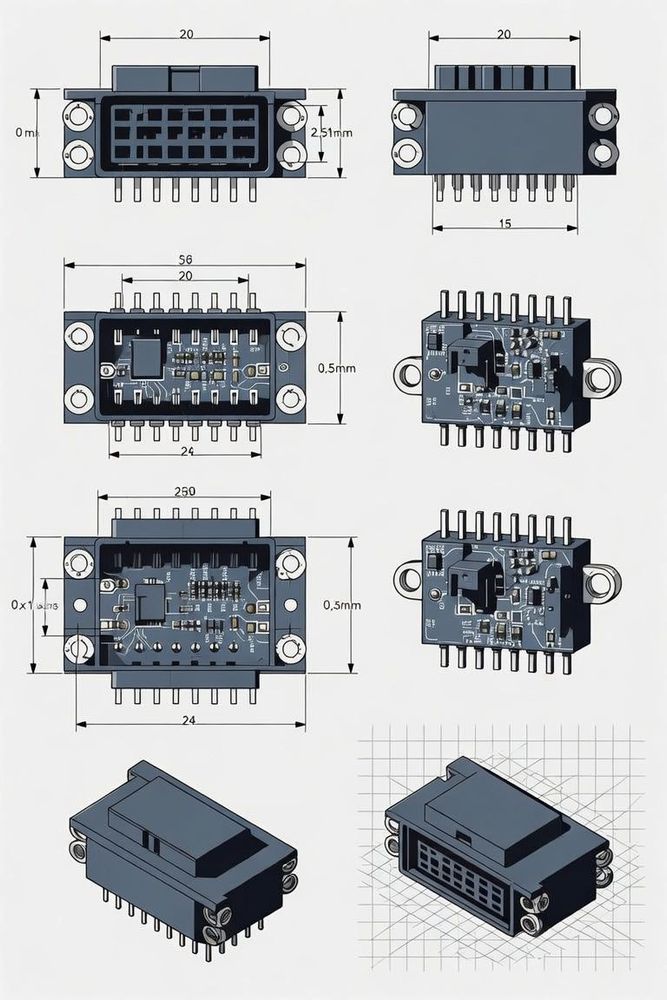
In the race to make electronic devices slimmer, lighter, and more efficient, traditional wire-to-board interconnects often hit a physical limit. Enter Flat Flexible Cable (FFC) connectors. These components provide a high-density, low-profile solution for parallel board-to-board connections, making them a staple in consumer electronics, automotive displays, and medical devices.
However, selecting the right FFC connector requires balancing several mechanical and electrical constraints.
Key Selection Criteria for FFC Connectors
1. Pitch and Pin CountFFC connectors come in standard pitches ranging from 0.3 mm up to 2.54 mm. While a 0.5 mm or1.0 mm pitch is most common for standard consumer applications, ultra-fine pitches ($0.3\text{ mm}$) are increasingly used in space-constrained smartphones and wearables.
2. Actuator Types: ZIF vs. Non-ZIFZero Insertion Force (ZIF): These utilize a mechanical locking slider or flip-lock lid. They experience virtually no wear during mating, making them ideal for high-vibration environments or applications requiring repeated maintenance.Non-ZIF: Rely purely on friction. They are more cost-effective and have a smaller footprint but are prone to wear and are best suited for permanent assemblies.
3. Contact LayoutDo you need top contact, bottom contact, or dual contact? Because FFC cables have exposed traces on only one side, your PCB layout must match the contact orientation of the connector to ensure a proper electrical path.Design Tip: If your manufacturing team needs flexibility during assembly, opt for dual-contact FFC connectors. They interface with the cable regardless of which way the exposed traces are facing.