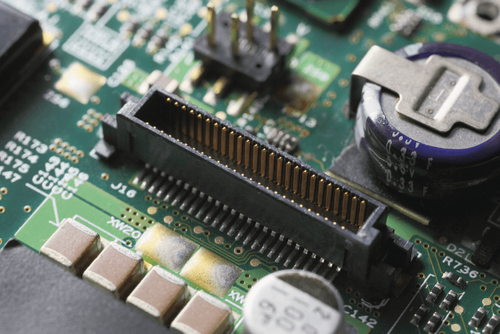
Pitch is the center-to-center distance between adjacent contacts, measured in millimeters. A 2.54 mm connector has contacts 2.54 mm apart, a 0.5 mm connector has them 0.5 mm apart.
Finer pitch lets you fit more contacts in less space, but it comes with trade-offs. Contacts and the gaps between them are smaller, so current per contact and working voltage are usually lower, and creepage and clearance shrink. Fine-pitch parts also need tighter board and assembly tolerances, are harder to hand-solder or rework, and are more sensitive to contamination and misalignment.
Choose the coarsest pitch your space allows, then confirm that the rated current, voltage and mating cycles still meet your needs at your temperature. Use fine pitch for dense signals and coarser pitch for power or for parts that must be assembled by hand. Always check the footprint and tolerance requirements on the manufacturer drawing.