OCP Server Interconnects
Open Compute Project (OCP) hardware trades proprietary server design for open, standardized interconnects — from management modules and rack-level power busbars to AI accelerator baseboards and storage. Here's how these specifications shape real hardware decisions for engineers building on OCP platforms.
More Key Articles
OCP and ORv3-Compliant Connectors: Standards Guide
OCP specifications define high-density power and signal interconnects. This guide maps each OCP domain to the connector family it uses and to our detailed articles.
NVIDIA Vera Rubin MGX 1.2: What the Open Rack Design Means for Connectors
NVIDIA's MGX 1.2 adds blind-mate liquid cooling, a liquid-cooled 5,000 A busbar and fanless trays for racks up to 250 kW. Here is what is confirmed and what it means for connectors.
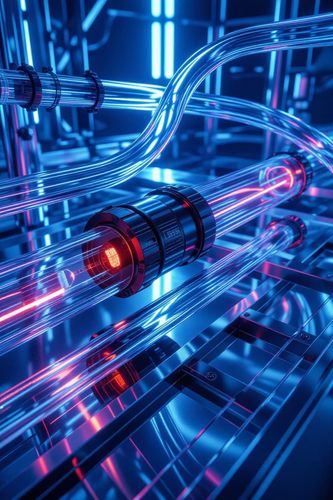
UQD and UQDB Quick Disconnects Explained: OCP's v2.0 Spec for Liquid-Cooled AI Racks
OCP's UQD v2.0.0 spec defines the couplings behind liquid-cooled AI trays. We summarize its numbers, compare NVIDIA's MQDB family, and list what to check when specifying parts.
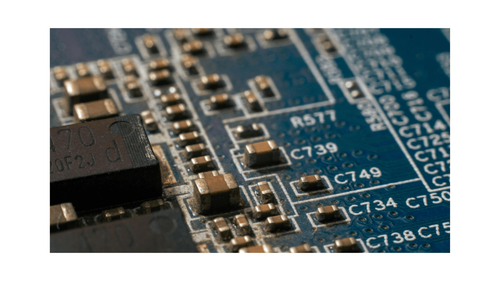
M-XIO and MCIO Connectors Explained: Cabled PCIe for DC-MHS Servers
DC-MHS modular servers move PCIe onto cables through M-XIO connectors. We summarize what TE and Molex publish, where their descriptions differ, and what to ask suppliers.
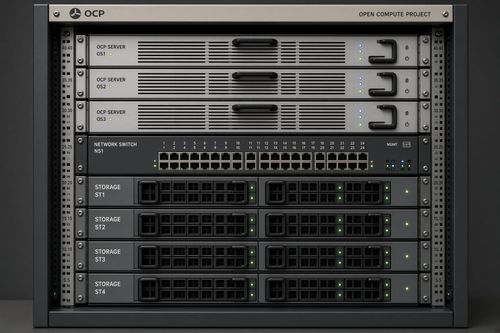
AMD Helion Rack: What It Means for Connectors
AMD's Helion blueprint packs up to 32,768 Zen 6 EPYC cores into a single rack. We break down the confirmed specs, power delivery mechanics, and interconnect implications.

USFP Explained: NVIDIA and Cisco's 400G-per-Lane Optical Module
NVIDIA and Cisco unveiled USFP, a 400 Gb/s-per-lane pluggable optic with a new two-dimensional array connector. We cover the confirmed specs and what is still open.

800 VDC Architecture: The Power Delivery Shift Beyond 48V
AI racks heading toward 600 kW push power distribution from 48V to 800 VDC. See the current math and what changes for busbars, creepage and clearance, and interlocks.

Meta IcePack and IceCube: The Liquid-Cooled 102.4T Network Rack
Meta's IcePack is a liquid-cooled network rack filled with IceCube 102.4T switch blades. Here is what is confirmed, what is not disclosed, and the connector questions it raises.

What Does "OCP/ORV3 Compliant" Mean? Connector Requirements Checklist
OCP connectors get called "compliant" loosely — but there's informal spec conformance, and then there's OCP Accepted™ and OCP Inspired™, two very different formal designations. Here's the actual checklist.
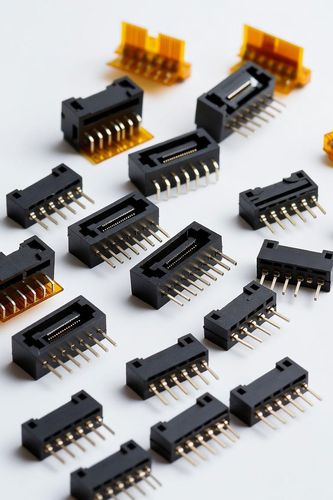
OCP DC-SCM Explained: The Data Center Secure Control Module Connector Interface
A detailed engineering guide to the OCP Data Center Secure Control Module (DC-SCM) connector interface, exploring board-to-board decoupling, high-speed signals, and server management physical design.

OCP OAM Connectors Explained: Accelerator Module Interconnect Design
Discover how OCP Open Accelerator Module (OAM) high-density mezzanine connectors handle high-speed interconnects, massive power delivery, and thermal tolerances in AI processing systems.

OCP Open Rack Busbar Power Connectors: ORv2 vs ORv3 Explained
Compare OCP Open Rack ORv2 and ORv3 busbar power connector architectures, examining 12V vs 48V current density, blind-mate tolerance, and contact design.

CRPS Explained: OCP's Common Redundant Power Supply Connector Standard
Explore the CRPS (Common Redundant Power Supply) connector interface, featuring card-edge pin assignment breakdown, hot-swapping mechanisms, and server chassis design.

EDSFF Connectors Explained: E1.S vs E3.S for OCP Server Storage
Compare EDSFF E1.S and E3.S storage connector form factors, examining SFF-TA-1002 edge interface pins, thermal airflow advantages, and high-density NVMe drive integration.
OCP-Compliant Connector Standards: NIC 3.0 and Modular Hardware Interconnects
A deep technical look at Open Compute Project (OCP) connector baselines, focusing on the mechanical and signal integrity requirements of the OCP NIC 3.0 form factor.
The Open Compute Project standardizes server hardware at the level most vendors used to keep proprietary — not just the CPU and memory, but how management modules connect, how power reaches each rack tray, how accelerators mount to a baseboard, and how storage drives interface with the chassis. For hardware engineers, this means a growing set of open, documented connector interfaces to design around instead of vendor-specific black boxes.
Where Each OCP Interconnect Fits
NIC 3.0 — Connector: SFF-TA-1002 card-edge, 0.60mm pitch, up to 140 positions. Connects: front-serviceable network/storage/compute mezzanine cards. Key specs: PCIe Gen 5/Gen 6, up to 800G Ethernet. Location: front-panel I/O slot.
DC-SCM — Connector: SFF-TA-1002 4C+ card-edge, 168 contacts. Connects: pluggable BMC/management module to the motherboard. Key specs: PCIe + NC-SI + USB + SPI/eSPI + I2C + GPIO, 3.3V/12V aux power. Location: motherboard management mezzanine.
OAM — Connector: high-density, low-profile mezzanine connector. Connects: GPU/AI accelerator modules to the OAM Universal Baseboard. Key specs: PCIe Gen 5/Gen 6 fabric, 12V or 48V power (hundreds of watts). Location: flat-mounted accelerator baseboard.
Open Rack busbar (ORv2/ORv3) — Connector: ORv2 blade/fork clip, ORv3 multi-finger clip. Connects: server/compute tray to the rack's vertical power rail. Key specs: ORv2 12.3V/~2.4-3kW per tray, ORv3 48V/10kW+ per tray. Location: rear of chassis, rack power zone.
CRPS — Connector: gold-plated card-edge into a backplane receptacle. Connects: redundant hot-swap power supply to backplane. Key specs: +12V main, +12VSB standby, PMBus/I2C control. Location: rear PSU bay.
EDSFF (E1.S/E3.S) — Connector: SFF-TA-1002 card-edge, 0.6mm pitch. Connects: NVMe SSDs to storage backplane. Key specs: E1.S PCIe x4/20-25W/1U, E3.S x4 or x8/40-70W/2U. Location: front or mid storage bay.
That standardization only helps if the physical interconnect details are actually understood — pin counts, voltage rails, mechanical retention, and thermal limits vary meaningfully across OCP's different subsystems. The articles below break down five of these interfaces individually: the DC-SCM management module connector, Open Rack's busbar power architecture, OAM accelerator interconnects, the CRPS power supply standard, and EDSFF storage connectors — plus the OCP NIC 3.0 interconnect framework that anchors this whole cluster.
Where This Shows Up
Adding or hot-swapping network, storage, or compute mezzanine cards from the front of the chassis → NIC 3.0.
Standardizing BMC, security, and monitoring hardware across CPU generations without a motherboard redesign → DC-SCM.
Connecting GPUs or AI accelerators to a shared baseboard → OAM.
Distributing power from the rack down to compute trays at scale → ORv2 for existing 12V fleets, ORv3 for new builds that need higher power density per tray and lower resistive losses.
Hot-swapping redundant power supplies from multiple vendors without changing the backplane → CRPS.
Choosing an NVMe SSD form factor for enterprise storage → EDSFF: E1.S for ultra-dense 1U compute nodes, E3.S for higher-capacity arrays and AI storage in 2U chassis.
OCP interconnect standards show up together in a single server platform far more often than in isolation. A typical OCP-compliant server might combine a DC-SCM module for management, an Open Rack busbar connection for power, CRPS-compliant redundant power supplies, EDSFF drives for storage, and — in AI-focused deployments — OAM accelerator modules sharing the same chassis.
This is exactly why these specifications are documented together as one hub rather than as unrelated topics: an engineer specifying one OCP interconnect is very likely to need the others in the same design.
See the Application Spotlight: Choosing Connectors for an OCP ORv3 AI Accelerator Rack for a full walkthrough of how these standards come together in one real build.