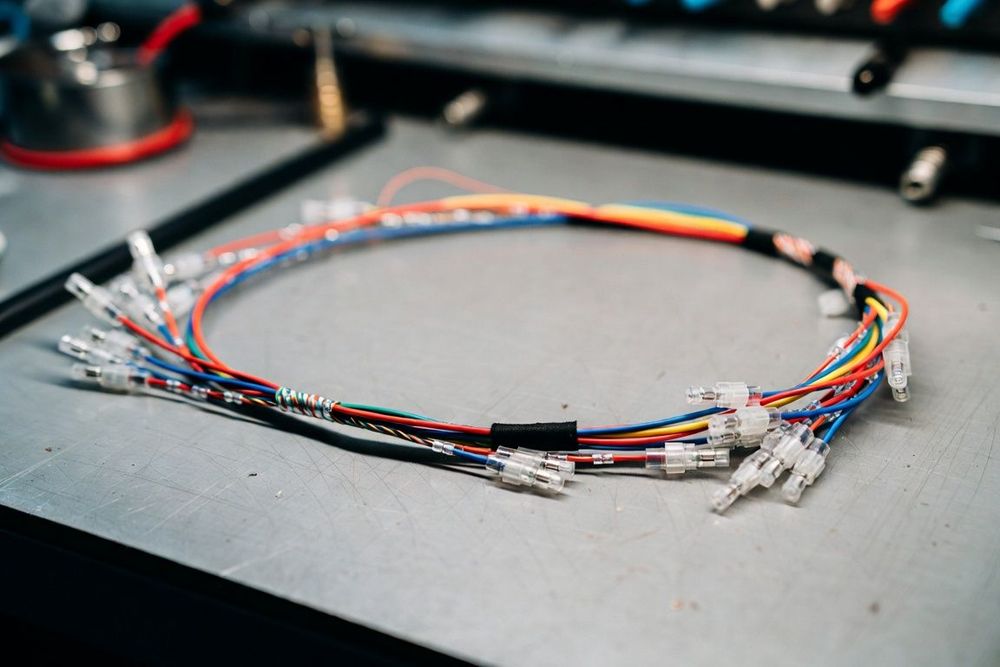
From Concept to Production: The Custom Harness Development Path
Moving a wire harness from a rough concept to a manufacturable, repeatable assembly involves more than picking wire and connectors. Custom harness manufacturers typically work through an engineering liaison process — translating a schematic or rough sketch into a formal harness drawing, building a prototype for validation, and only then releasing the design to full-scale production.
Build-to-Print vs. Design Collaboration
Some engineering teams provide a fully specified harness drawing and expect the manufacturer to build exactly to print. Others work collaboratively with the manufacturer's engineering team from a rough concept, relying on their design-for-manufacturability expertise to finalize wire routing, connector selection, and bundle configuration. Either approach is common; the key is being explicit up front about which model is in use, since a build-to-print vendor may not flag manufacturability issues a collaborative partner would catch early.
Key Design-for-Manufacturability Considerations
Tooling and Custom Molds
Overmolded or custom-shaped harness sections often require dedicated injection molds. Manufacturers with in-house CNC machine shops can produce custom molds directly from CAD drawings, shortening prototype turnaround compared to outsourcing tooling to a third party.
Prototype Validation Before Tooling Commitment
Committing to hard tooling before validating a prototype is a common and costly mistake. A functional prototype — even a hand-built one — should confirm connector fit, bend radius clearance, and electrical continuity before investing in production tooling or high-volume crimp/molding equipment.
Supply Chain and Component Sourcing
Custom harnesses often specify connectors, terminals, and wire types from multiple suppliers. Manufacturers with mature supply chain management — including min/max inventory control and supplier contract pricing — reduce lead time risk compared to sourcing every component on a per-order basis.
Certification and Quality Requirements
Depending on end application, custom harness manufacturing may need to meet specific certifications:
- IPC/WHMA-A-620: workmanship standards for wire harness and cable assemblies, with Class III requirements for high-reliability applications.
- ISO 13485: quality management specific to medical device manufacturing.
- UL 508 / UL 764: safety certification for industrial control equipment and electromechanical devices.
- ITAR registration: required for harnesses supplied into certain defense and aerospace programs.
Choosing a Manufacturing Partner
When evaluating a custom cable harness manufacturer, look beyond unit price to their engineering support (in-house liaison and design review), tooling capability, certifications relevant to your industry, and demonstrated experience in your specific application — a manufacturer with deep medical device experience is not automatically the right fit for a ruggedized defense harness, and vice versa.