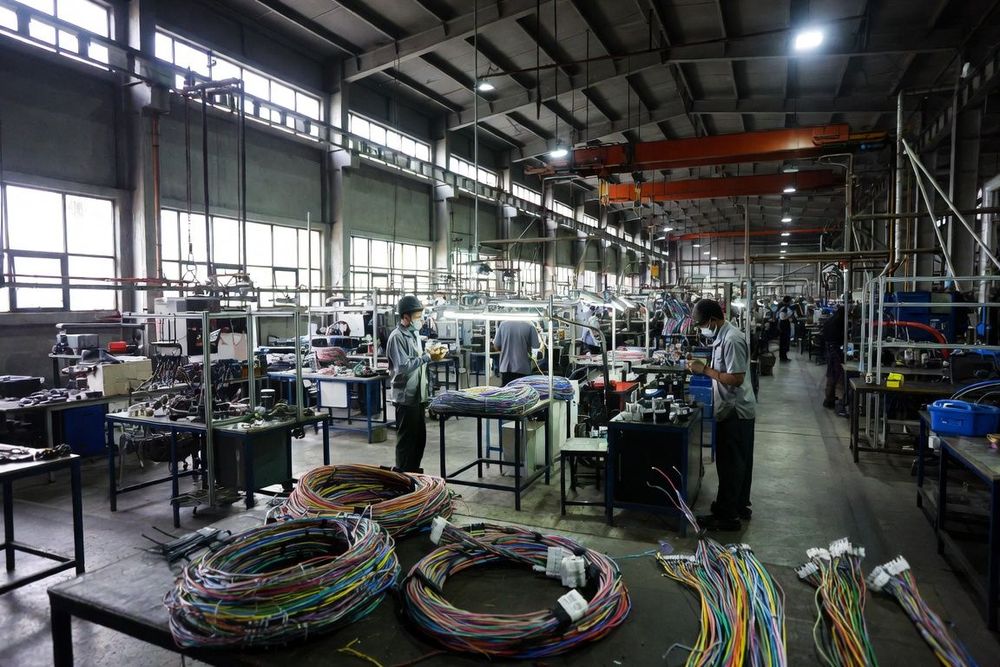
Understanding Wire Harnesses in Modern Systems
A wire harness (also called a cable harness or wiring loom) is an organized bundle of individual wires, terminals, and connectors routed together as a single assembly. Rather than running dozens of loose wires point-to-point through a chassis, a harness consolidates them into branched bundles secured with sleeving, tape, or conduit, simplifying assembly, reducing installation errors, and protecting conductors from abrasion and vibration.
Harnesses appear anywhere a system needs to distribute power, signal, or ground connections across multiple points — automotive dashboards and engine bays, industrial control panels, medical equipment, aerospace platforms, and data center racks all rely on custom harness assemblies rather than discrete point-to-point wiring.
Core Components of a Wire Harness
Conductors and Wire Gauge
Each wire in a harness is sized (American Wire Gauge, or AWG) according to its current-carrying requirement and voltage drop tolerance. Harnesses commonly mix gauges within a single assembly — heavier gauge conductors for power delivery, finer gauge for low-current signal or sensor lines. Wire gauge alone isn't the full picture — ambient temperature and bundle size also reduce a conductor's real-world current capacity; see how to calculate cable derating factors for the formula and reference tables.
Connectors and Terminals
Each branch of a harness terminates in a connector or crimped terminal matched to its mating component. Connector selection drives much of the harness design process, since pin count, pitch, and locking style determine how the harness routes and branches.
Protective Coverings
Harnesses are wrapped in braided sleeving, spiral wrap, convoluted tubing, or heat-shrink tape to bundle conductors, resist abrasion, and in some cases provide EMI shielding or chemical resistance for harsh environments.
Wire Harness vs. Cable Assembly: What's the Difference
The terms are often used interchangeably, but there is a practical distinction. A wire harness typically refers to a branched bundle of individual wires terminating at multiple points around a system — think of an automotive wiring loom with dozens of branch-outs. A cable assembly more often refers to a simpler point-to-point or small-bundle configuration, such as a single multi-conductor cable terminated with a connector on each end. In practice, custom manufacturers like Amphenol DC Electronics build both, often as part of the same integrated assembly, since a complex system may need branched harness sections feeding into simpler cable assembly interconnects.
Design Considerations for Wire Harnesses
Routing and Branch Points
Harness routing must account for the physical path through an enclosure or chassis, including bend radius limits, clearance from heat sources, and separation between power and sensitive signal branches to minimize EMI coupling.
Strain Relief and Bend Radius
Every connector and branch point needs mechanical strain relief to prevent conductor fatigue where the harness flexes during installation or operation. Minimum bend radius rules (typically several times the bundle diameter) prevent insulation cracking and conductor damage over the product lifecycle.
Connector Selection
Since a harness may terminate at many different components, connector selection must balance pin density, current rating, environmental sealing, and mechanical retention appropriate to each termination point — often requiring several different connector families within a single harness design.
Manufacturing Process Overview
Custom harness manufacturing typically follows cutting and stripping wire to length, crimping or soldering terminals, inserting terminals into connector housings, bundling and taping or sleeving the assembly, and final electrical and visual inspection. High-reliability harnesses — particularly for medical, aerospace, and defense applications — are built and inspected to IPC/WHMA-A-620 workmanship standards, which define acceptance criteria for crimps, solder joints, and mechanical assembly.
Common Applications
- Automotive: engine bay and body wiring looms connecting sensors, actuators, and control modules.
- Industrial automation: control cabinet wiring and machine-to-machine harnesses for factory equipment.
- Medical devices: patient monitoring, imaging, and surgical robotics cabling built to ISO 13485 standards.
- Aerospace and defense: ruggedized harnesses qualified for vibration, temperature extremes, and EMI shielding.
- Data centers: power distribution and signal harnesses within server racks and power distribution units.