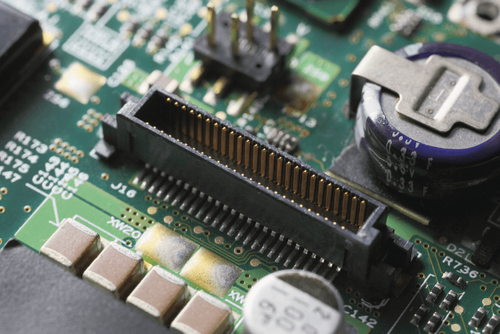
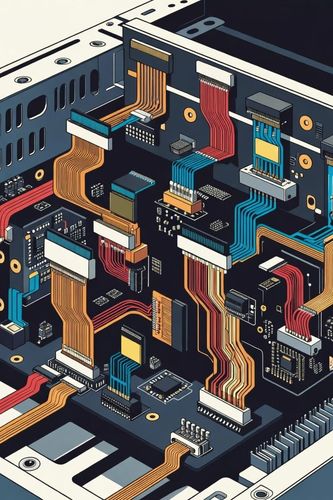
A board-to-board connector joins two printed circuit boards directly, mating a header on one board with a receptacle on the other. A wire-to-board connector joins a PCB to wires or a cable, usually a header on the board and a crimped housing on the wire side.
Board-to-board suits boards that stack or sit side by side with a fixed spacing: the connector sets the stack height and the alignment, and it keeps the signal path short. Wire-to-board suits cases where the other side is somewhere else in the product, needs to move, or has to be serviced, because the wires can be routed and the connection is easy to unplug.
Start from the mechanical layout, then check the current, signal speed and pitch you need. For board-to-board, confirm the stack height and the tolerance of the board spacing; for wire-to-board, confirm the wire gauge range and the crimp tooling the connector requires.