Why Copper Has a Hard Limit
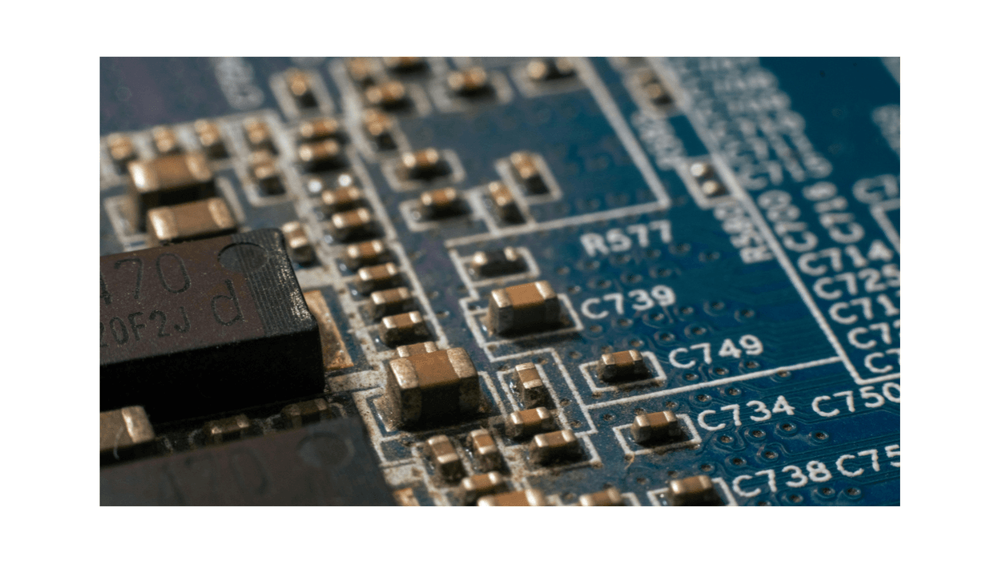
As data center architectures scale up transmission speeds to handle intense AI workloads, copper pathways encounter a hard physical barrier. At data rates reaching 224 Gbps and beyond, the high-frequency attenuation of standard copper circuit board traces is so severe that it limits copper reach to just a few inches. To prevent signal loss from choking performance, the industry is transitioning away from long copper traces and moving the optical fiber link as close to the primary processing silicon as possible — the evolution driving Co-Packaged Optics (CPO).
Co-Packaged Optics Architecture
Traditional optical networking relies on front-panel pluggable transceivers linked to the central ASIC via long, lossy host PCB traces. Co-Packaged Optics completely bypasses this intermediate copper layer by mounting miniaturized optical engines directly inside the primary IC package, sharing a single, unified substrate with the CPU or switch ASIC.
The electrical path between the high-speed processing core and the optical modulator is reduced to a few millimeters, virtually eliminating trace attenuation and slashing system power consumption. The primary challenge then shifts to implementing high-density blind-mate optical connectors that pass light signals cleanly from the internal optical engines through to the front panel fiber network.
Expanded Beam Connectors (EBC)
Connecting fiber optic cables requires extreme geometric precision. Standard physical contact (PC) fiber connectors rely on pressing two polished glass cores—each measuring just 9 microns in diameter for single-mode fiber—directly together. Any tiny sub-micron misalignment, or a single speck of dust trapped between the faces, will scatter the light waves, causing massive insertion loss.
To make optical interfaces practical for standard server racks, CPO architectures deploy Expanded Beam Connectors (EBC). These interfaces embed miniature spherical lenses into the connector mouth, expanding the tiny light beam to multiple times its original diameter before it crosses the mechanical mating gap. On the receiving side, a matching lens refocuses the wide beam back down into the fiber core. This expanded profile makes the connector highly tolerant to dust particles and structural alignment errors.
External Laser Sources
Implementing a CPO framework also requires integrating dedicated external laser sources (ELS). Because high-power lasers are highly sensitive to thermal stress and experience shorter lifespans when exposed to the intense heat of a high-performance compute ASIC, engineers isolate the active lasers into independent, hot-pluggable modules located at the cool front panel of the chassis. The laser light is funneled into the internal CPO optical engines via specialized polarization-maintaining fiber cables and dense blind-mate optical connectors.
The Photonic Future of Data Center Interconnects
By decoupling active laser thermal envelopes from the processing core, optimizing light beam paths with expanded beam micro-lenses, and standardizing high-density optical interfaces, co-packaged optics provides the foundational infrastructure needed to drive next-generation petabit-scale computing fabrics.