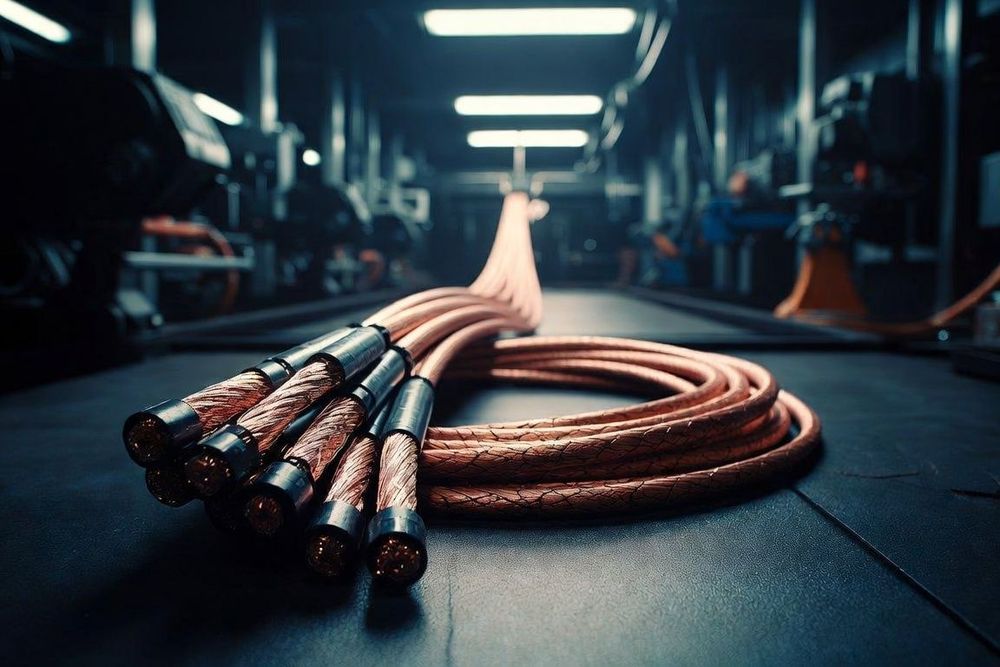
The Reach and Power Trade-Off at Extreme Data Rates
At 112G and 224G PAM4 per-lane data rates, system designers face severe physical trade-offs when choosing between Direct Attach Copper (DAC) cables, Active Optical Cables (AOC), and pluggable optical transceivers.
Reach scales roughly as follows across media types: internal overpass or near-chip copper covers distances under about 1 meter; Direct Attach Copper (26 to 30 AWG) covers roughly 1 to 3 meters; active copper cables and linear optics extend toward 10 meters; and short-reach or multi-mode/single-mode optics take over from there out to 100 meters and well beyond.
Technical Comparison: Copper vs. Optical
- Max Reach at 112G PAM4: Direct Attach Copper reaches 1.0m to 1.5m using 30 AWG or 26 AWG conductors. Active Optical Cables and transceivers reach 100 meters over multi-mode fiber up to 10 kilometers over single-mode fiber.
- Power Consumption: DAC draws very low power, close to 0W per port. AOC and transceivers draw substantially more, typically 12W to 25W per port.
- Latency: DAC is near-zero, under 1 nanosecond of processing delay. AOC and transceivers introduce low-to-moderate latency from DSP or retimer processing delays.
- Cost Profile: DAC represents the baseline cost. AOC and transceivers run roughly 10 to 15 times higher cost than equivalent DAC links.
- Bend Radius and Cable Weight: DAC cabling is thick and rigid, adding meaningful rack loading weight. Optical cabling is extremely thin, flexible, and lightweight by comparison.
The Scale-Up vs. Scale-Out Split
Scale-Up (Intra-Rack): Copper remains the dominant choice inside the rack. Passive DAC cables are used for switch-to-server and switch-to-GPU interconnects up to 1.5 meters. Beyond 1.5m at 224G, internal "OverPass" or cabled backplane assemblies route copper directly from the ASIC substrate to the front panel, bypassing lossy PCB traces.
Scale-Out (Inter-Rack / Spine Layer): Optical interconnects are mandatory once cable runs exceed 2 to 3 meters. Emerging architectures like Linear Pluggable Optics (LPO) and Co-Packaged Optics (CPO) aim to eliminate the power-hungry digital signal processor (DSP) from the optical module, bridging the power and latency gap between copper and traditional optics.